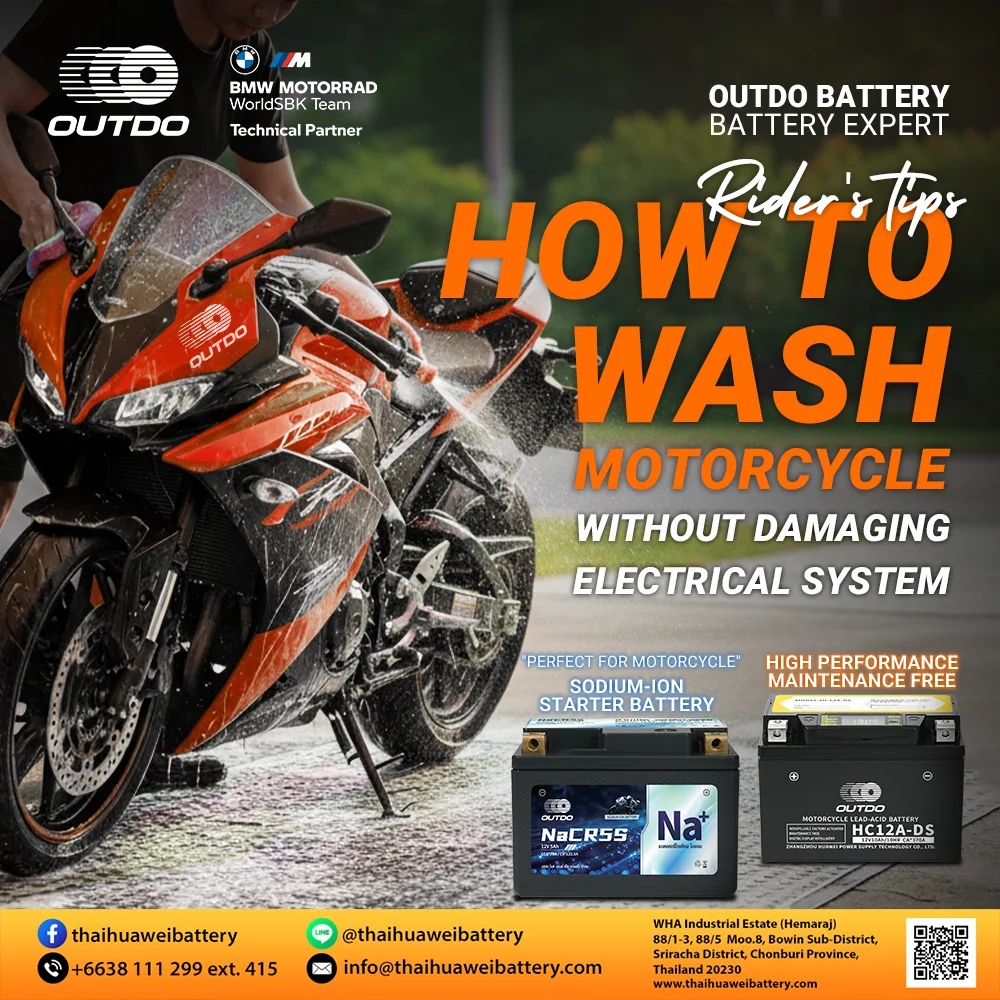
Keeping your motorcycle clean helps it look new and extends its lifespan. However, improper washing methods can cause serious damage, especially to the electrical system and battery.
In this guide, we’ll show you how to wash your motorcycle the right way, ensuring it stays clean, safe, and reliable for everyday riding.
Preparation Before Washing Your Motorcycle
1. Let the Engine Cool Down
Before washing, park your motorcycle and allow the engine to cool completely. This helps prevent injury and reduces the risk of damage caused by sudden temperature changes to engine components.
2. Check the Battery Before Washing
Inspect the battery terminals for white or green corrosion and make sure all connections are tight. Loose or corroded terminals can lead to starting problems after washing.
3. Cover the Exhaust Pipe
To protect internal components, use a plastic bag to cover the exhaust outlet. This prevents water and moisture from entering the exhaust system.
Safe Motorcycle Washing Techniques
1. Separate Clean Water and Soapy Water
Use one bucket for motorcycle shampoo and another for clean water. This prevents dirt from transferring back onto the bike and causing stains or scratches.
2. Use Microfiber Cloths or Soft Sponges
Always clean your motorcycle with microfiber cloths or soft sponges designed for vehicle washing. Avoid rough towels, which can easily cause scratches on painted surfaces.
3. Use Motorcycle-Specific Cleaning Products
Only use cleaning products made specifically for motorcycles. Household detergents can damage rubber seals, paint, and electrical components over time.
4. Apply Lubricant After Washing
Once the motorcycle is dry, apply lubricant or grease to friction points such as the chain. This ensures smooth riding and helps prevent rust and premature wear.
5. Wax the Motorcycle After Washing
Applying a protective wax helps keep your motorcycle looking shiny and new while reducing dirt buildup and protecting the paint from scratches.
What You Should Avoid When Washing a Motorcycle
1. Using High-Pressure Water
Avoid using pressure washers. High-pressure water can force its way into seals, bearings, and electrical components, especially the battery area, causing corrosion, electrical leakage, and long-term damage.
2. Scrubbing Too Hard
Stubborn stains like bug splatter should not be scrubbed aggressively. Excessive force can scratch surfaces. Instead, use a dedicated cleaner and gently wipe the area.
3. Letting the Motorcycle Air-Dry
Allowing the motorcycle to air-dry can leave water spots and increase the risk of rust on metal parts. Always dry the bike with a microfiber cloth after washing.
Frequently Asked Questions (FAQ)
How long should I wait before washing my motorcycle?
Wait at least 30-60 minutes after riding to allow the engine and components to cool down.
How often should I wash my motorcycle?
It depends on usage. For frequent riders or those riding in dusty or wet conditions, washing once a week is recommended.
How can I wash my motorcycle without damaging the battery or electrical system?
Avoid spraying high-pressure water near sensitive areas such as the battery, ignition switch, dashboard, throttle housing, and under the seat.
After washing, dry all areas thoroughly with a microfiber cloth to prevent moisture buildup and corrosion.
Ride safe!
Tagged: motorcycle