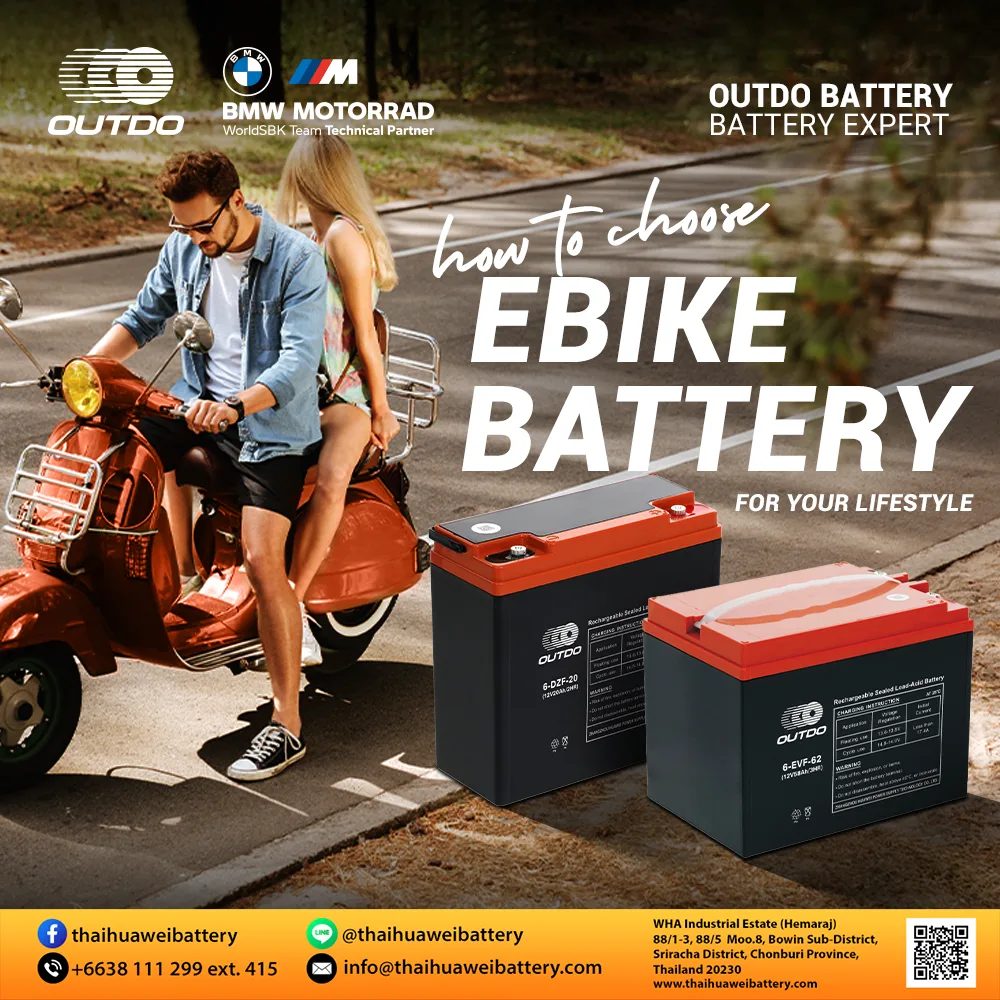
Nowadays, Ebike or electric bicycles have become one of the most popular means of transportation. They are energy-efficient and offer lower travel costs compared to traditional fuel-powered vehicles. One of the most important components to consider when using an Ebike efficiently is the battery, which must match your riding habits and lifestyle.
This article will help you understand the key factors in choosing an Ebike battery that suits your lifestyle, along with simple tips to help extend its lifespan.
Why Choosing the Right Ebike Battery Matters
Choosing the right battery is crucial, it directly affects your Ebike’s performance, range, safety, and lifespan. If the battery doesn’t match your usage pattern, your Ebike may not have full performance, meaning you won’t get the best value for your investment. Here are the key factors to consider when selecting an Ebike battery.
Types of Ebike Batteries You Should Know
Different types of batteries vary in terms of price, performance, durability, and safety. Understanding these differences helps you make the best choice for your needs.
1. Lead-Acid Batteries
These batteries use lead plates and electrolyte solutions to store energy. They are affordable and widely available, making them a popular entry-level option. However, they are heavy and less efficient in power delivery.
Pros: Low cost and easy to find
Cons: Heavy weight, lower efficiency, and shorter lifespan
2. Lithium Iron Phosphate (LiFePO₄) Batteries
If safety is your top priority, LiFePO₄ batteries are an excellent choice. They are designed to be extremely stable and are significantly more resistant to thermal runaway than other lithium chemistries. However, they charge more slowly and come at a higher price point.
Pros: Excellent safety and stability
Cons: Slower charging and higher cost
3. Lithium-Ion Batteries
These are lightweight and fast-charging, offering excellent convenience with minimal maintenance. They’re ideal for everyday riders who value performance and practicality. However, they’re also the most expensive option.
Pros: Fast charging, long-lasting, and lightweight
Cons: Highest price among all battery types
Voltage, A Key Factor in Choosing the Right Battery for Your Lifestyle
Voltage (V) is one of the most critical factors in selecting the right battery. It affects the weight, speed, range, and cost of your Ebike. Common voltages available on the market are 36V, 48V, and 72V.
1. Budget
Higher voltage batteries generally cost more. If your riding needs aren’t too heavy-duty, choosing a moderate voltage option can be more cost-effective.
2. Riding Distance & Terrain
For short-distance commutes on flat roads, lower voltage batteries can provide sufficient performance.
3. Speed Requirements
If you want higher speed or stronger acceleration, higher-voltage batteries will deliver better performance.
4. Compatibility with Your Ebike
Finally, ensure that the voltage you choose is compatible with your Ebike’s specifications for optimal performance and safety.
Tips to Extend Ebike Battery Life
After choosing the right battery, proper maintenance is key to extending its lifespan and ensuring consistent performance. Here are a few practical tips:
1. Store the Battery in a Dry Place
Humidity can corrode internal components and cause damage.
2. Avoid Extreme Heat
Using or charging the battery in high temperatures can cause it to discharge faster and reduce its lifespan. The ideal operating temperature depends on the battery type.
3. Avoid Deep Discharge
Never let the battery drop below 20% capacity, as it can damage internal cells.
4. Use Certified Chargers
Using a high-quality, manufacturer-approved charger ensures stable power flow and prevents long-term damage.
Conclusion & Buying Advice
Choosing an Ebike battery that fits your lifestyle is the key to efficient and safe riding every day. Whether you use your Ebike for short city commutes or long weekend rides, the right battery will help your bike run smoother, go farther, and last longer.
By understanding the differences between lead-acid, lithium iron phosphate, and lithium-ion batteries, and choosing the proper voltage (36V, 48V, or 72V) for your needs, you can make a smarter and more confident decision.
If you’re looking for a high-quality, safety-certified Ebike battery, consider OUTDO Ebike Batteries, tested for performance, lightweight, durable, and available in multiple models to suit different riding styles.
Investing once in a premium-quality battery means investing in safety, reliability, and long-term value for every ride.
Frequently Asked Questions (FAQ)
What voltage should I choose for my Ebike battery?
The right voltage depends on your budget, riding distance, terrain, and desired speed. For short, flat commutes, a 36V battery is usually enough, while 48V suits mixed daily riding, and 72V is best if you need higher speed or stronger acceleration. Always confirm the voltage matches your Ebike’s own specifications before buying.
Which type of Ebike battery lasts the longest?
Among the three common types, lithium-ion batteries generally offer the longest lifespan alongside fast charging and a lightweight design, though they cost more than lead-acid or LiFePO₄ options. Lead-acid batteries are the most affordable but have the shortest lifespan and lowest efficiency.
Which Ebike battery type is safest?
LiFePO₄ (lithium iron phosphate) batteries are the safest option available, built to be significantly more resistant to thermal runaway than other lithium chemistries. The trade-off is slower charging and a higher price compared to lead-acid or standard lithium-ion batteries.
How can I make my Ebike battery last longer?
Store the battery in a dry place, avoid charging or using it in extreme heat, never let it drop below 20% capacity, and always charge it with a certified, manufacturer-approved charger. Following these habits helps prevent premature capacity loss and extends the battery’s overall lifespan.
Ride safe!
Tagged: ebike