Lithium-ion and sodium-ion are both rechargeable battery chemistries, and they work in a similar way: ions move between two electrodes to store and release energy. The difference is which ion does the work. Lithium-ion uses lithium, sodium-ion uses sodium. That single change shifts the cost, the weight, the cold-weather behaviour, and the safety profile of the finished battery.
Neither chemistry wins outright. Lithium-ion leads on energy density, while sodium-ion leads on cost, cold tolerance, and safety, so the right pick depends on what the battery has to do. This guide compares the two side by side, then looks at two common applications: starting a motorcycle or vehicle, and storing solar energy at home.
How lithium-ion and sodium-ion batteries differ
Lithium-ion: high energy density, proven at scale
Lithium is light and holds a high cell voltage, so a lithium-ion battery packs more energy into every kilogram. Lithium iron phosphate (LiFePO4) cells deliver around 150 to 210 Wh/kg, and nickel-based cells used in premium electric vehicles go higher still. Lithium-ion is also the mature option, produced in enormous volume for phones, laptops, power tools, EVs, and grid storage.
Sodium-ion: lower cost, better in the cold
Sodium is one to two orders of magnitude more abundant than lithium in the Earth’s crust and seawater, and sodium-ion cells need no cobalt or nickel (AZoM). They tolerate cold far better than lithium iron phosphate, holding useful capacity well below freezing where lithium chemistries lose range and charge slowly (IEA). The trade-off is energy density: sodium-ion sits around 90 to 175 Wh/kg, so the battery is heavier and larger for the same stored energy.
Lithium vs sodium-ion battery comparison
| Feature | Lithium-ion (LiFePO4) | Sodium-ion |
|---|---|---|
| Energy density | 150 to 210 Wh/kg | 90 to 175 Wh/kg |
| Weight for the same energy | Lighter | Heavier |
| Raw materials | Lithium, sometimes cobalt or nickel | Sodium, iron, carbon (abundant) |
| Cost trend | Mature and stable | Falling as production scales |
| Cycle life | About 3,000 to 6,000 | About 2,000 to 6,000 |
| Cold-weather performance | Weakens below 0 C | Strong, works well below freezing |
| Thermal safety | Needs careful management | More thermally stable, lower fire risk |
| Sitting at empty | Deep discharge can cause damage | Can rest at 0 V without damage |
| Maturity | Dominant across consumer, EV, and storage | Early commercial, scaling through 2025 and 2026 |
As of 2025, global sodium-ion production was still under 1% of lithium-ion output, though shipments are growing fast and major manufacturers have moved to mass production (IEA, MIT Technology Review).
Which battery is better for motorcycles and vehicle starting?
For starting a motorcycle or vehicle, sodium-ion is a strong fit. A starter battery only needs a short, high-current burst, so its low energy density barely matters. What matters is cranking power in heat and cold, tolerance for long idle periods, and safety. Sodium-ion covers all three.
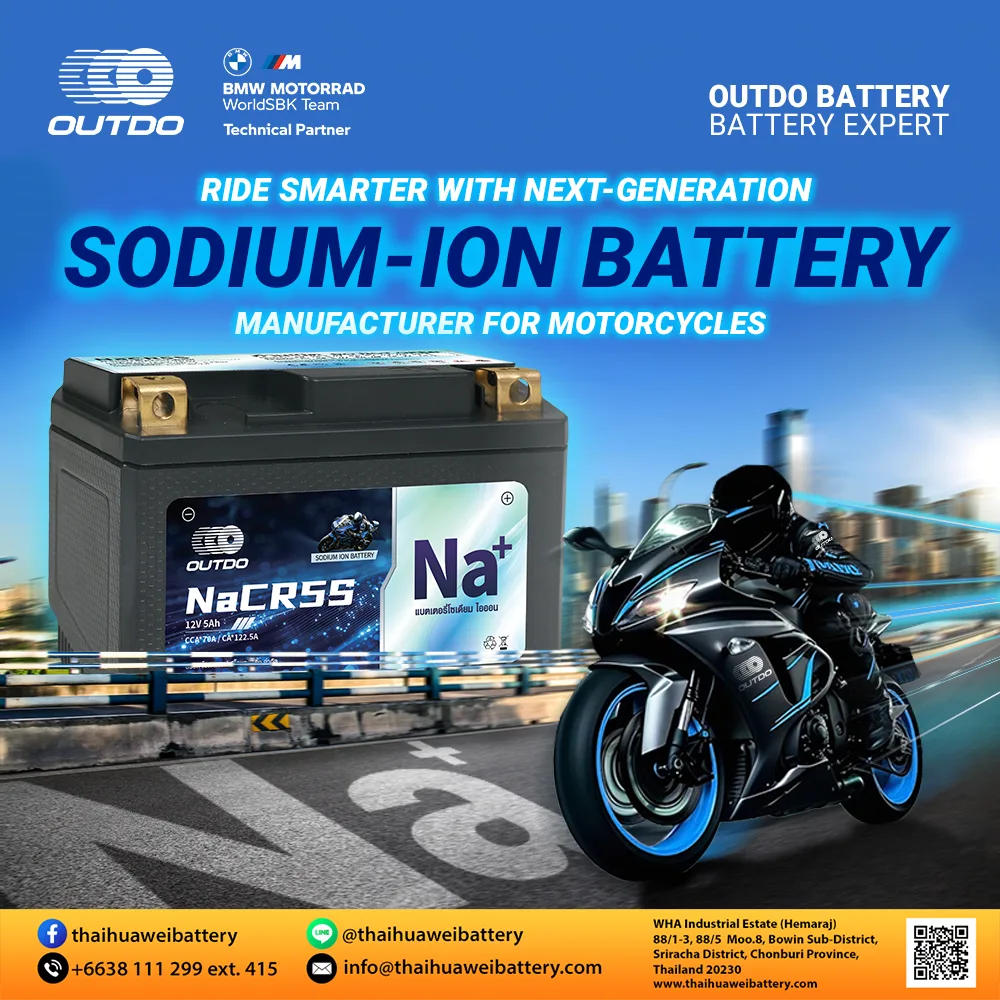
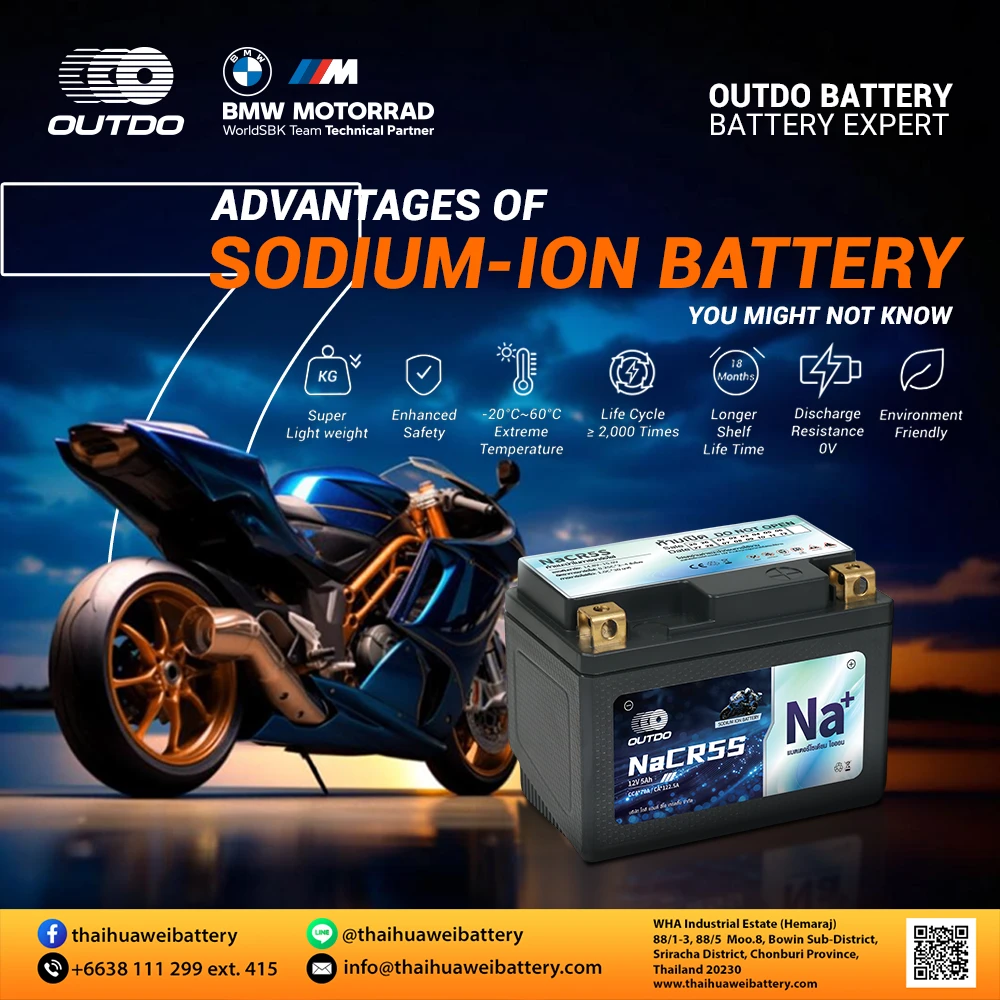
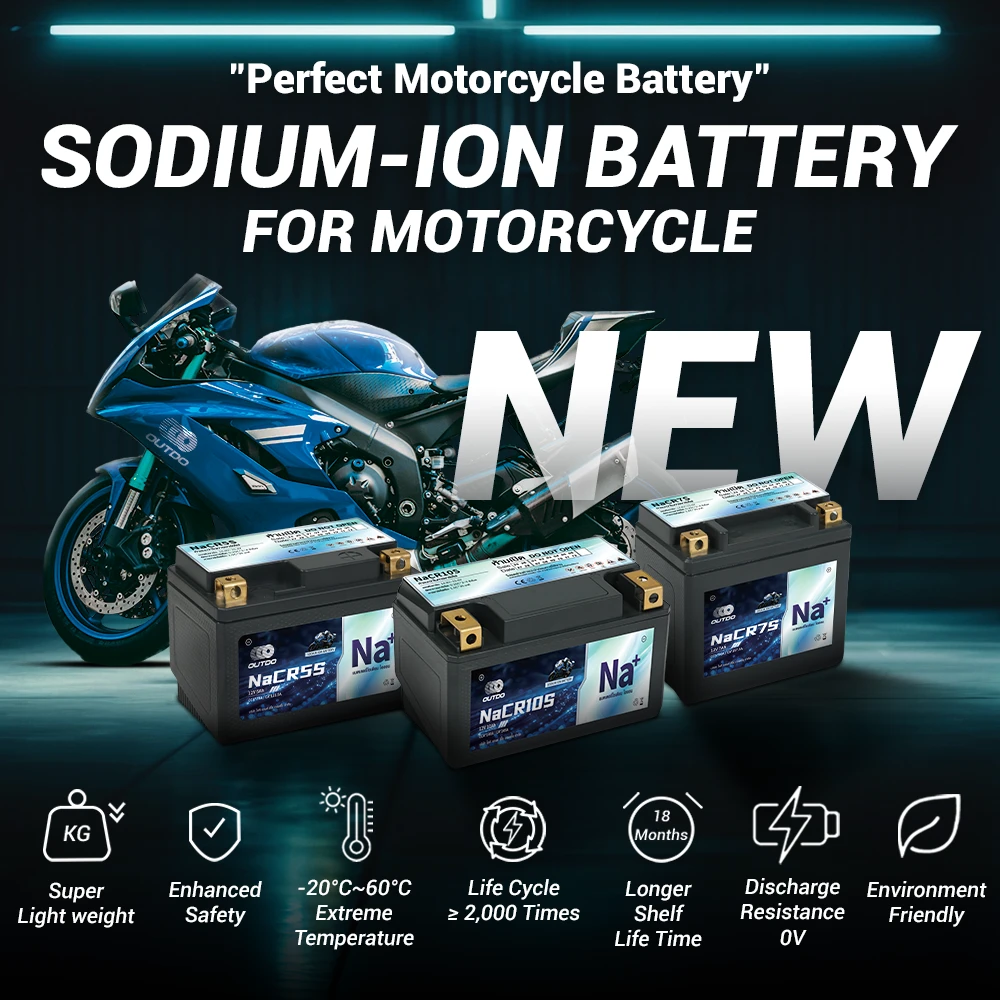
An OUTDO sodium-ion motorcycle battery operates from -20 C to 60 C, is rated for more than 2,000 charge cycles at 100% depth of discharge, and can be stored for up to 18 months on a single charge. It also survives a full discharge to 0 V and recovers without permanent damage, which forgives the forgotten charger and the bike left in storage over a wet season. Lithium and lead-acid starter batteries are both less tolerant of deep discharge and temperature swings. For a fuller list, see 7 advantages of sodium-ion batteries.
Lithium-ion starter batteries still have a place where saving every gram counts, such as race bikes, but for daily riding and fleet use the sodium-ion trade-offs land in the rider’s favour.
Which battery is better for solar and home energy storage?
For solar and home energy storage today, lithium iron phosphate is the standard choice. It offers high round-trip efficiency, a long cycle life of several thousand cycles, a compact footprint, and a mature supply chain with proven inverter compatibility. Most residential storage systems on the market use it.
Sodium-ion is moving into this space, not out of it. A home battery sits still, so extra weight and size cost little, while sodium-ion’s lower fire risk and strong cold performance are real advantages for garages, outbuildings, and cold climates. The first grid-scale sodium-ion installations came online in 2025, and cell makers expect stationary storage to be an early mass market as prices fall (IEA). For a home system being specified now, lithium iron phosphate remains the practical pick, with sodium-ion a credible option to watch over the next few years. Thaihuawei’s lithium battery range uses LiFePO4 chemistry for storage.
Frequently asked questions
What is the main difference between lithium and sodium-ion batteries?
Lithium-ion stores more energy in a lighter, smaller package, which suits phones, laptops, and long-range electric vehicles. Sodium-ion uses cheaper, more abundant materials and holds up better in cold weather, which suits stationary storage and starter batteries where size and weight matter less.
Are sodium-ion batteries cheaper than lithium batteries?
Sodium is far more abundant than lithium and the cells need no cobalt or nickel, so the raw materials cost less. At today’s small production scale the finished-cell price is close to lithium iron phosphate, but analysts expect sodium-ion to undercut it as manufacturing scales up.
Which battery lasts longer, lithium or sodium-ion?
Both can last thousands of cycles. Lithium iron phosphate cells are rated for roughly 3,000 to 6,000 cycles. Modern sodium-ion cells reach a similar range, and OUTDO sodium-ion starter batteries are rated for more than 2,000 cycles at full depth of discharge.
Can sodium-ion batteries replace lithium in electric vehicles?
For most long-range EVs, not yet. Sodium-ion holds less energy per kilogram, so the pack is heavier for the same range. It is a strong fit for city cars, two-wheelers, and stationary storage where lower energy density is acceptable.
Which battery should you choose?
Match the chemistry to the job. Choose lithium-ion when energy per kilogram is the priority: portable electronics, long-range electric vehicles, and space-constrained home storage where lithium iron phosphate is already the standard. Choose sodium-ion when cost, cold tolerance, safety, and long idle periods matter more than size and weight, which describes motorcycle and vehicle starting almost exactly.
Whichever chemistry you pick, choose a brand that meets international safety and quality standards so the battery performs and stays safe over its full life.
👉 Browse the full OUTDO sodium-ion battery range 👉 Explore OUTDO lithium batteries for storage 👉 Related reading: Lead-acid vs lithium UPS batteries
Sources
- International Energy Agency, Sodium-ion battery momentum grows, but challenges remain
- AZoM, Sodium vs Lithium: Which Chemistry Has the Battery Advantage?
- MIT Technology Review, Sodium-ion batteries: 10 Breakthrough Technologies 2026
Ride safe!
Tagged: sodium