


Published:

In today’s digital-driven world, reliable power has become essential, not optional. For factories, offices, data centers, and critical facilities, even a few seconds of power loss can cause data corruption, equipment failure, or costly downtime.
That’s where the UPS (Uninterruptible Power Supply) comes in. It acts as a shield which providing instant backup power during outages and maintaining voltage stability.
But what truly makes a UPS system work is its battery — the real heart that keeps everything running when power is lost.
What Does a Battery Do Inside a UPS?
A UPS battery is much more than an energy storage unit. It’s the core component that enables the system to deliver smooth, uninterrupted power during emergencies.
Here’s what a UPS battery actually does:
1. Provides Instant Power When the Main Supply Fails
When utility power cuts out, the battery immediately takes over then keeping servers, computers, and machinery operational.
2. Maintains Voltage Stability
The battery helps stabilize voltage fluctuations, protecting sensitive electronics from damage.
3. Works with the Inverter and Rectifier Circuits
Converts stored DC power into AC power and back again when charging to ensure continuous energy flow.
Types of Batteries Used in UPS Systems
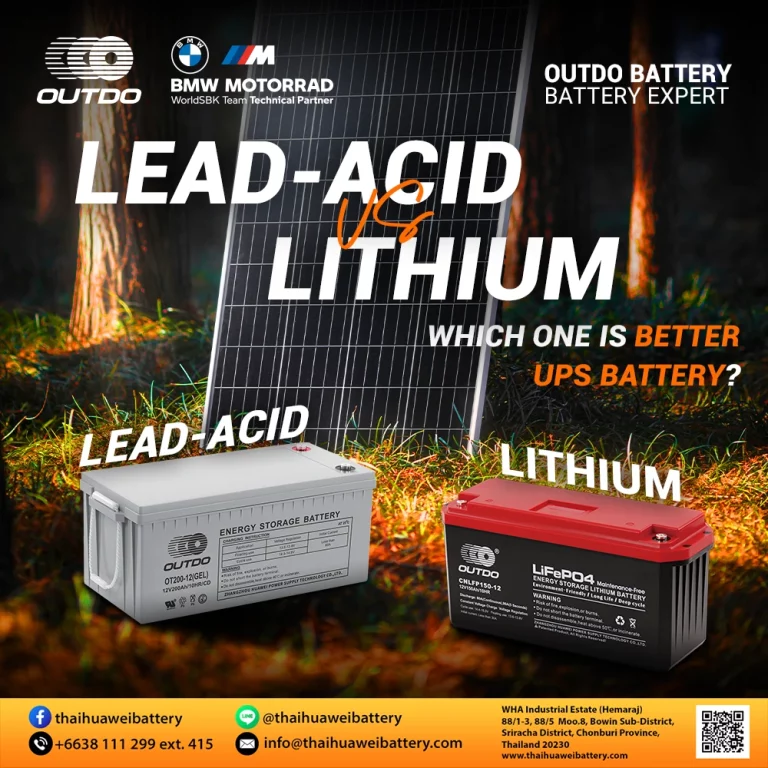
The type of battery you choose affects the system’s lifespan, cost efficiency, and overall performance. Common types of UPS batteries in the market include Lead-acid (VRLA), Lithium-ion / LiFePO₄, and Nickel–Cadmium (NiCd), each with its own advantages and limitations.
If you want to explore more about the differences between lead-acid and lithium batteries, check out our comparison article:
👉 Lead-Acid vs Lithium UPS Batteries – Which One Is Better? here.
Common Problems When UPS Batteries Fail
Even if your UPS unit appears to be functioning normally, a failing battery can render it useless during a power outage.
Watch out for these warning signs:
- Shorter backup time than usual
- UPS overheating or the cooling fan running continuously
- “Battery Fault” or “Overheat” alarms appearing on the display
- Fluctuating voltage or unstable output power
🧠 Maintenance Tip: Perform regular battery inspections every 6–12 months and replace aging units according to the manufacturer’s recommended service life.
How to Choose the Right UPS Battery
Selecting the right UPS battery ensures safety, performance, and reliability. Here’s what to look for:
1. Capacity (Ah / Wh)
Must match the UPS specifications.
2. Voltage (V)
Ensure compatibility with your UPS system (e.g., 12V, 24V, 48V)
3. Operating Temperature Range
Choose a model designed for your environment (especially for hot factory floors or server rooms)
4. Quality Certifications
Look for ISO, CE, or UL standards for safety and performance.
5. Trusted Manufacturer
Work with an experienced UPS battery manufacturer that offers after-sales support and warranty.
Conclusion: The Battery — The True Power Behind Every UPS
A UPS system is only as reliable as the battery inside it. When the power goes out, the battery is the true backbone that keeps your operations running smoothly.
If you’re looking for a trusted UPS battery manufacturer with ISO-certified production and advanced lithium technology,
👉 Thaihuawei Battery provides custom-designed UPS batteries for offices, factories, and data centers — ensuring performance, safety, and long service life.
🔋 Explore our products:
→ View UPS Battery Products
→ Download UPS Battery Catalogue
Discover how the right UPS battery can power your business with reliability and efficiency.
Stay powered!
#UPS #BatteryCare #UPSBattery #EnergyTips #BatteryManufacturer #OUTDOBATTERY #ThailandBattery #BatteryFactory #ไทยหัวเวยแบตเตอรี่ #ผลิตแบตเตอรี่ #ThaihuaweiBattery #OD #BatteryImporter #BatteryExporter




2 Responses